The Complete Guide to AI in Middle East Real Estate (2026)
- 2 months
-
 Mahendra Tomer
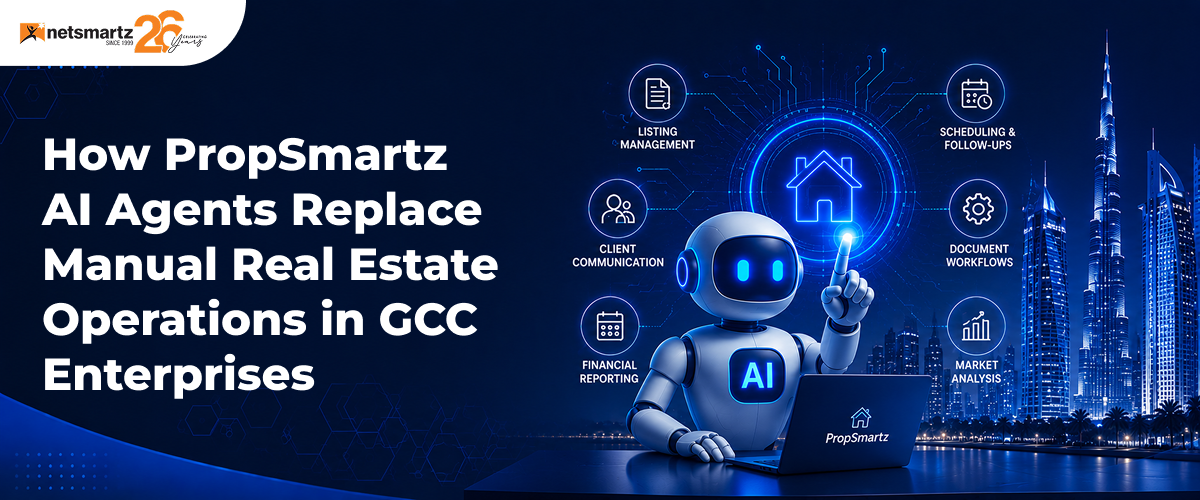
The Middle East real estate market is growing at a pace few regions can match. Dubai recorded over 180,000 property transactions in 2024. Saudi Arabia is developing entire cities from the ground up. Abu Dhabi, Doha, and Riyadh are attracting billions in foreign investment annually.
But with this scale comes complexity.
More leads. More listings. More stakeholders. More data. And more pressure on real estate teams to respond faster, close smarter, and manage operations without proportionally growing their headcount.
This is exactly why AI in Middle East real estate is no longer a future trend – it is an operational reality for the region’s most competitive property businesses today.
This guide covers everything you need to know about real estate CRM for developers. What does AI in real estate actually mean? How is it being applied across the GCC. Why is adoption accelerating. And what real estate professionals need to understand to stay ahead.
AI in real estate uses machine learning and automation to manage leads, communications, deal tracking, pricing, and reporting – helping property teams work faster and make smarter decisions.
What Is AI in Real Estate?
Artificial intelligence in real estate refers to the use of machine learning, predictive analytics, and CRM for real estate agents to handle property-related tasks that were previously manual, time-consuming, or data-intensive.
AI does not replace real estate professionals. Instead, it acts as an intelligent layer on top of existing workflows – handling repetitive tasks, surfacing insights from large datasets, and helping teams make faster and more informed decisions.
In practical terms, AI in real estate covers:
- Automatically scoring and ranking leads by conversion likelihood
- Sending personalized follow-up communications without manual input
- Forecasting which deals in a pipeline are likely to close
- Optimizing property listings for better visibility and engagement
- Recommending pricing based on market trends and comparable transactions
- Detecting early signs of tenant dissatisfaction through communication analysis
Each of these capabilities individually saves hours of manual work. Together they transform how a real estate business operates.
Why Is AI Adoption Accelerating in the Middle East?
Several factors unique to the GCC are driving faster AI adoption in real estate compared to many other global markets.
1. Transaction Volume Has Outgrown Manual Processes
Dubai’s residential market alone processed over 180,000 transactions in 2024 – a volume that makes manual lead management, follow-up tracking, and pipeline reporting practically impossible for competitive teams. AI is no longer optional at this scale. It is a necessity.
2. Vision 2030 Is Driving Digital Transformation in Saudi Arabia
Saudi Arabia’s Vision 2030 places digital transformation at the center of its economic agenda. Real estate is one of the primary beneficiaries. Developers and agencies across the Kingdom are investing in proptech to manage the scale of giga projects like NEOM, Diriyah, and The Line – developments that require entirely new approaches to sales, leasing, and operations management.
3. Buyer and Tenant Expectations Have Changed
The UAE and Saudi Arabia rank among the world’s highest for smartphone penetration and internet usage. Today buyers and tenants expect instant responses, digital-first experiences, and seamless communication. AI enables real estate teams to meet these expectations consistently on scale without adding headcounts.
4. International Competition Is Intensifying
As global developers, investors, and brokerages enter GCC markets, local firms face increasing competitive pressure. AI adoption is becoming a key differentiator – allowing teams to respond faster, manage more leads, and deliver better client experiences than competitors relying on manual processes.
5. Richer Data Is Making AI More Accurate
Maturing property markets produce richer historical data – transaction records, pricing trends, buyer behavior patterns that make AI predictions more accurate and actionable. The longer AI systems operate in a market, the smarter and more valuable they become.
Key AI Use Cases in Middle East Real Estate
-
AI Lead Scoring and Prioritization
-
Automated Follow-Up and Communication
-
Predictive Deal Intelligence
-
Smart Listing Optimization
-
Pricing Intelligence
-
Sentiment Analysis and Tenant Retention
-
Virtual Property Tours
-
Multilingual Communication Automation
In high-volume markets like Dubai, a developer can receive thousands of inquiries from a single project launch. Not every inquiry will be converted. AI lead scoring analyzes each prospect – their engagement history, inquiry source, response behavior, and profile data – and assigns a score indicating how likely they are to purchase.
Sales teams use this score to prioritize their time on the highest-value opportunities. Lower-scored leads are nurtured automatically rather than consuming valuable agent hours.
The result is shorter sales cycles, higher conversion rates, and better use of every team member’s time.
Consistent follow-up is one of the biggest operational challenges for GCC real estate teams. Agents managing large pipelines often lose deals simply because follow-ups slip through the gaps.
AI solves this by automating the entire follow-up sequence. Based on where each prospect is in the buying or leasing journey, the system sends timely and personalized messages – inquiry responses, property information, viewing reminders, offer follow-ups, lease renewal notices without any manual trigger.
Every lead stays warm. Every relationship stays active. No opportunity is lost to poor follow-up discipline.
Knowing which deals are likely to close and which are quietly dying is one of the most valuable capabilities AI brings to real estate sales management.
Predictive deal intelligence analyzes pipeline activity, engagement patterns, time-in-stage data, and historical conversion rates to surface deals that need attention. Sales managers across the UAE and Saudi Arabia are using these insights to intervene early, reassign resources, and forecast revenue more accurately.
Rather than discovering a deal has stalled after the fact, teams can act while there is still time to recover it.
In a competitive market, how a property is presented matters as much as the property itself. AI listing optimization reviews descriptions, headlines, and keyword choices and suggests improvements based on what drives engagement and inquiry rates across similar listings.
For developers managing large inventories across multiple projects, AI can apply these optimizations at scale, improving the visibility and performance of every listing without requiring a copywriter for each one.
Accurate pricing is critical in GCC real estate markets where conditions shift quickly. Overpricing leads to extended vacancies. Underpricing leaves value on the table.
AI pricing intelligence analyzes comparable transactions, current market demand, seasonal trends, and location-specific data to recommend optimal pricing for new listings and lease renewals. Commercial landlords managing multiple assets across Abu Dhabi or Jeddah use this capability to keep portfolios competitively positioned without constant manual market research.
For property managers handling large residential or commercial portfolios, tenant retention is a constant priority. Replacing a tenant is significantly more expensive than renewing one.
AI sentiment analysis monitors communication patterns – emails, service requests, chat interactions and detects early signs of dissatisfaction, frustration, or disengagement. Property managers receive alerts that allow them to address issues proactively before they result in a vacancy.
In markets with high tenant mobility like Dubai, this early warning capability has a direct impact on occupancy rates and portfolio yield.
Virtual tours have moved from a pandemic-era convenience to a standard expectation in GCC real estate. International investors evaluating properties across borders, and buyers considering off-plan developments before construction is complete, rely on virtual tour experiences to make informed decisions.
AI enhances virtual tours by personalizing the experience – highlighting features most relevant to each viewer’s preferences and integrating sales workflows to trigger follow-up communication automatically after each viewing session.
The GCC’s real estate buyer base is among the most diverse in the world – spanning local Arabic-speaking clients, South Asian investors, European buyers, and international institutions.
AI-powered communication tools can generate and automate messages across multiple languages, ensuring every prospect receives timely and relevant communication regardless of their language preference. This is particularly valuable for developer sales teams managing international launches and for property managers serving diverse tenant communities.

AI and CRM: Why the Platform Matters
AI capabilities in real estate do not work in isolation and require a strong real estate AI data strategy to deliver results. Their full value is realized when they operate inside a connected CRM platform where every lead, property, deal, communication, and document is tracked in one place.
A disconnected AI tool might score leads accurately but if those scores are not visible inside the platform where agents actually work, the insight has limited practical value.
The most effective platforms integrate intelligence directly into real estate CRM systems used in daily workflows. Agents see lead scores, deal with risks, and follow-up recommendations inside the same environment where they manage their pipeline. No switching between tools. No manual data transfer. No insight is lost in translation between systems.
For GCC real estate enterprises managing multiple asset classes – residential developments, commercial leasing, and retail property management – this unified approach is particularly important. It eliminates data silos, gives leadership a single view of performance across the entire portfolio, and allows new AI capabilities to be added as the business evolves.
What AI Means for Different Real Estate Teams
-
Property Developers
-
Brokerage Firms
-
Property Managers
-
Real Estate Investment Firms
-
Commercial Landlords
AI manages lead qualification, follow-up sequences, and buyer communication from project launch through post-sales handover. Development teams can handle larger launch volumes without proportionally scaling their sales headcount.
AI automates listing creation, lead scoring, follow-up, and performance reporting. Brokers spend less time on administration and more time building client relationships and winning mandates.
AI simplifies lease renewals, maintenance coordination, and tenant communication. Sentiment monitoring helps teams identify at-risk tenants before issues escalate to vacancy.
AI-powered analytics track portfolio performance, forecast returns, and surface acquisition or disposal opportunities. Investment teams make faster and more confident decisions backed by data rather than intuition.
AI monitors lease expiries, renewal likelihood, and tenant satisfaction automatically – allowing landlords managing large commercial portfolios to stay ahead of occupancy risks across multiple assets simultaneously.
The Future of AI in GCC Real Estate
AI adoption in Middle East real estate is still in its early stages relative to the region’s overall market size. The fundamentals driving adoption – transaction volume, digital expectations, competitive pressure, and data maturity are all strengthening.
Several developments will shape the next phase of AI in GCC real estate:
- Agentic AI – AI systems that do not just surface insights but take actions autonomously – scheduling viewings, sending offers, initiating renewals with minimal human intervention.
- Deeper ERP Integration – Connecting front-office AI capabilities with back-office financial systems to give leadership a complete view from lead generation to revenue recognition.
- Hyper-Local Market Intelligence – AI models trained on granular, community-level transaction data rather than city-wide averages – enabling far more precise pricing and demand forecasting.
- Arabic Language AI – Natural language processing models optimized for Arabic and its regional dialects – improving the quality and cultural relevance of automated communication for GCC markets specifically.
Conclusion
AI is reshaping how real estate operates across the Middle East from Dubai’s high-volume residential market to Saudi Arabia’s landmark commercial and mixed-use developments.
The teams adopting AI-powered platforms today are building a significant operational advantage. They are managing more leads, closing deals faster, retaining tenants longer, and making better decisions with the data they already have.
For the GCC real estate market growing faster than almost anywhere else in the world – AI is not a future consideration. It is a present competitive reality.
The question for real estate professionals across the region is no longer whether to adopt AI, but how quickly they can implement platforms like Salesforce real estate cloud effectively.

Frequently Asked Questions
-
What is AI in real estate?
-
What is proptech in the Middle East?
-
How does AI lead scoring work in real estate?
-
Is AI replacing real estate agents in the Middle East?
-
How is proptech supporting Saudi Vision 2030?
-
What should real estate teams look for in an AI platform?
-
How long does AI implementation take for a real estate business?
-
What data does AI need to work effectively in real estate?
AI in real estate uses machine learning, predictive analytics, and automation to handle tasks including lead scoring, follow-up communication, deal forecasting, listing optimization, pricing recommendations, and tenant management – reducing manual effort and improving decision-making across property operations.
Proptech in the Middle East refers to digital and AI-powered tools designed to modernize property buying, selling, leasing, and management. Adoption is accelerating across the GCC driven by Vision 2030, UAE digital initiatives, growing transaction volumes, and rising buyer expectations for digital-first experiences.
AI lead scoring analyzes prospect data – inquiry source, engagement behavior, profile attributes, and historical patterns to assign each lead a conversion likelihood score. Sales teams use this to focus on their highest-value opportunities first while lower-priority leads are nurtured automatically.
No. AI handles repetitive tasks like data entry, follow-ups, lead scoring, and reporting – free agents to focus on client relationships, negotiations, and decisions requiring human judgment. AI makes real estate professionals more productive than replacing them.
Vision 2030 prioritizes digital transformation across Saudi Arabia’s economy including its real estate sector. Proptech tools help developers and agencies manage the scale of giga projects, automate sales and leasing operations, and deliver modernized buyer and tenant experiences aligned with the Kingdom’s broader development goals.
Real estate teams should prioritize platforms that cover the full property lifecycle, integrate AI directly into daily workflows, support multilingual communication, offer enterprise-grade security, connect with existing business systems, and can scale as transaction volumes and portfolio complexity grow.
Implementation timelines vary by platform and business complexity. Cloud-based platforms built on established CRM infrastructure typically go live in weeks rather than months – covering discovery, configuration, data migration, integration setup, and team training.
AI performs best with clean, connected data including lead history, communication records, transaction data, property information, and market comparables. The completer and more consistent with the data, the more accurate the AI’s scoring, predictions, and recommendations become over time.