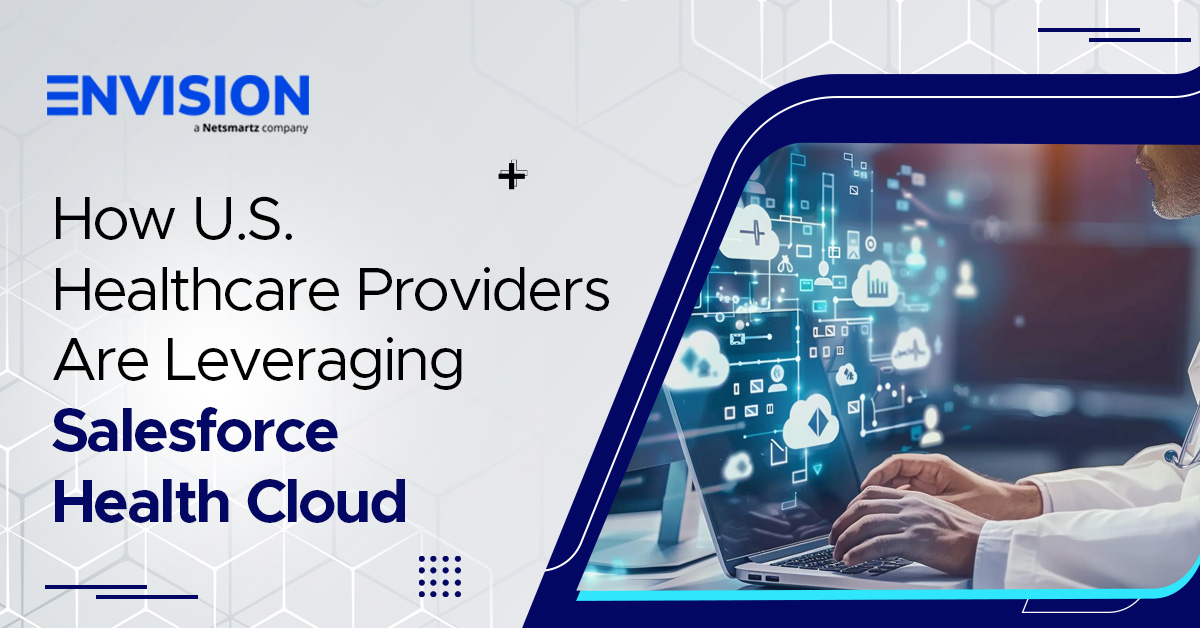
How U.S. Healthcare Providers Are Leveraging Salesforce Health Cloud?
- 8 months
-
 Sumeet Srivastava
The U.S. healthcare system is at an intersection presently, struggling between innovation and inefficiency. Problems related to fragmented systems, clinician burnout, data silos, and rising costs are still present in the system while it outlooks for digital tools, AI, and data-driven approaches to reshape healthcare. Today, healthcare providers are facing a looming question of how to integrate technology, care delivery, and patient experience to achieve measurable outcomes?
That’s where Salesforce Health Cloud steps in. As a universal healthcare CRM platform, the Health Cloud system is helping hospitals, clinics, and payers reimagine care delivery. To do this the system centralizes patient data, enables care coordination, and supports proactive and personalized health management. This results in establishing a more connected, efficient, and human-centered healthcare system. A system that’s designed for both today’s challenges and tomorrow’s promise.
How Providers Are Using Salesforce Health Cloud in 2025
U.S. healthcare providers are using Salesforce in diverse ways to generate high-impact results. Below are key Salesforce Health Cloud use cases driving improved patient outcomes.
- Risk Mitigation and Predictive Insights
- Development of Care Pathways
- Real-Time Alerts and Closed-Loop Communication
- Improved Patient Engagement
- Fewer Readmissions
- Improved Performance
- Expanding Access with Telehealth
Salesforce Health Cloud helps in analyzing historical data and using disease surveillance automation. This allows providers to identify patients at the most risk for readmission or chronic condition before the condition deteriorates. Additionally, AI models embedded in Health Cloud prioritize interventions and resource allocation.
Each patient’s progress reports allow providers to develop personalized care plans. This helps them enable smarter task management, referrals, and collaboration across teams. This, in turn, increases the chances of patient improvement along with utmost adherence to his/her requirements and satisfaction.
With Health Cloud in place, care providers can install a trigger-based system. This system triggers alerts for abnormal results, missed appointments, or even worsening symptoms. When paired with remote patient monitoring, the system allows care teams to intervene immediately and close all forms of unnecessary communication loops.
One of the best advantages of the Salesforce Health Cloud is better patient engagement. The patient engagement tools allow individuals to access health records, receive reminders, and chat directly with care coordinators without wasting sensitive time. This increases trust, improves adherence, and enhances the overall satisfaction of the patient.
Isn’t that a blessing in disguise? Envision allows you to empower your patients with real-time engagement tools using top-notch Salesforce Health Cloud CRM services that can transform your organization’s patient-care experience. You can contact our platform experts to learn more.
Health Cloud helps care providers and hospitals with multiple regulatory tasks. This includes managing discharge planning, post-hospital follow-up, and other community care tasks. Hence, with these facilities in place, care providers can easily lower readmission rates and improve continuity of care for all the patients uniformly.
Health Cloud helps care providers with integrated dashboards. These visual drafts provided deep visibility into outcomes, satisfaction, and cost metrics for the patients as well as the hospitals. Additionally, these insights also allow the leadership to monitor health data management performance and modify their strategies to achieve better and more fruitful results.
Telehealth solutions are getting more popular by day, and the Health Cloud is playing its vital role in this transition. The system allows care providers to connect virtual visits, documentation, and patient follow-up data into one seamless workflow. These tangible Salesforce Health Cloud benefits can be seen across US hospitals, payers, and care networks.
Why Salesforce Health Cloud Matters?
The Salesforce Health Cloud is becoming a cornerstone of healthcare digital transformation in 2025. The immense benefits offered by the platform are allowing it to take the center stage and drive the world of care at full throttle. Here are some of the advantages that this Salesforce cloud has to offer:
- Unified Patient View
- Streamlined Workflows and Automation
- Empowering Patient Engagement
- Data-Driven Insights and Predictive Analytics
- Security and Compliance
Salesforce Health Cloud provides a single, 360-degree view of the patient by integrating data from multiple systems. This includes the systems for Electronic Health Records (EHR) integration, claims, and social determinants of health. This comprehensive visibility empowers clinicians to make faster and more informed decisions. Additionally, with such a reliable system in place, care divers are enjoying the benefits of reduced duplicate tests and other gaps in healthcare.
Through intelligent clinical workflow automation, Health Cloud orchestrates care plans, follow-up reminders, referral tracking, and team collaboration. This ensures that every single personnel, from primary care physicians to case managers, works on and from the same page, eliminating the scope of confusion.
Acting as an advanced patient engagement platform, the Health Cloud delivers personalized and omnichannel communication to all. Patients can easily schedule appointments, view personalized care plans, and even connect with their care team through secure portals, chatbots, or mobile apps with the Health Cloud in place.
Health Cloud helps care teams anticipate patient needs, identify high-risk individuals, and intervene early to prevent complications. To help healthcare facilities with these tasks, the Cloud uses health risk assessments and predictive analytics for delivering accurate and reliable insights.
The Salesforce Health Cloud system is a HIPAA-compliant CRM tool that ensures 100% data privacy, auditability, and role-based access. Hence, all care providers develop trust on the platform and know that sensitive health data is secure across every touchpoint. These Salesforce Health Cloud features create a powerful foundation for better care delivery and bridge all gaps to develop a smarter and more proactive health ecosystem.
The Transformation and Its Impact
The shift from traditional care to continuous wellness management defines the future of healthcare. Using Salesforce Health Cloud for healthcare providers, organizations can evolve from reactive interventions to proactive, data-driven care. Here’s what Salesforce Health Cloud brings to the table:
-
Proactive vs. Reactive Care
Predictive analytics highlight high-risk patients that allow early outreach and intervention before crises occur. -
Seamless Transitions of Care
With Salesforce Health Cloud integration, all care team members can get visibility during patient handoffs which, in turn, reduces readmissions. -
Holistic Health Approach
Providers can enable the true potential of population health management by incorporating social and behavioral data. This data addresses all the non-clinical factors that can impact the outcomes in care. -
Continuous Learning Loop
Real-time analytics allow health systems to refine workflows, measure impact, and continuously improve patient care.
This transformation demonstrates the evolving role of Salesforce healthcare solutions as a CRM as well as an intelligent nervous system that connects every aspect of the patient’s health to a single space.
Challenges and Mitigation Strategies for Healthcare Providers
Adopting new technologies is always complicated and scary. The reluctance to start something new and dive into something better can get overwhelming. However, healthcare providers can find practical ways to navigate through common challenges. Some of the common challenges in adopting and incorporating Salesforce Health Cloud and their solutions include:
- Integration Barriers: Traditional systems are difficult to integrate with other systems. Early adoption of APIs and FHIR standards paired with effective consultation with Salesforce Health Cloud integration partners and top companies can streamline this connectivity.
- Change Management: Clinicians need clear training and leadership support to embrace new tools. Some pilot programs and iterative feedback loops can easily help foster quicker adoption in such cases.
- Security Concerns: There is no reason to be concerned about security. With HIPAA compliant CRM protocols and Salesforce’s robust architecture, providers can easily protect patient data while maintaining accessibility.
- ROI Measurement: organizations can demonstrate tangible returns on their investment with the Health Cloud as it allows easy tracking of readmission rates, patient satisfaction, and overall cost savings.
If adopted, these strategies can ensure the long-term success and scalability of any Salesforce Health Cloud implementation project.
Conclusion: Building a Smarter and Healthier Future
In the coming years, the integration of population health management, AI, and clinical workflow automation will enable unprecedented levels of predictive, preventive, and participatory care. Through Health Cloud, providers can plan care coordination across entire ecosystems and unite clinical, social, and behavioral health in a single pane.
For organizations striving to remain competitive, investing in Salesforce healthcare solutions emerges as a strategic imperative to gain quality, access, and equity.
The future of American healthcare depends on the connection between systems, data, and people. Salesforce Health Cloud unifies that vision. By delivering advanced data migration and integration, automation, and patient engagement tools, it empowers providers to deliver smarter, more compassionate care.
Whether you’re a hospital, clinic, or payer, adopting Salesforce Health Cloud for healthcare providers means embracing a future where insight drives action.

Frequently Asked Questions (FAQs)
- What makes Salesforce Health Cloud different from traditional EHRs?
- How secure is Salesforce Health Cloud for managing patient data?
- Can Salesforce Health Cloud help with value-based care models?
- Does Salesforce Health Cloud integrate with third-party tools and devices?
- How does Salesforce Health Cloud support remote care?
Salesforce Health Cloud is different and better than traditional EHRs as it goes beyond clinical recordkeeping and integrates patient, social, and behavioral data into a single view. Unlike traditional EHRs focused on documentation, it emphasizes care coordination, analytics, and engagement. This empowers healthcare providers to deliver proactive, personalized, and connected care across multiple systems and touchpoints.
Salesforce Health Cloud is a HIPAA-compliant CRM that ensures the highest standards of data privacy and security. Health Cloud includes encryption, audit trails, access controls, and compliance frameworks that easily safeguard sensitive health data while maintaining interoperability and ease of collaboration across care teams.
Yes, Salesforce Health Cloud can help with value-based care models. The tool enables providers to support care by integrating health risk assessments, tracking patient outcomes, and optimizing care coordination. Its analytics tools measure performance against quality metrics, helping organizations improve efficiency, reduce costs, and achieve better population health outcomes aligned with value-based reimbursement models.
Yes, Salesforce Health Cloud can integrate with other Electronic Health Records (EHR) and supports APIs, HL7, and FHIR standards to connect with medical devices, telehealth apps, and third-party tools. This interoperability enables unified data access, improved workflow efficiency, and more informed decision-making across the entire care ecosystem.
Salesforce Health Cloud supports remote care through remote patient monitoring and telehealth solutions. It allows continuous engagement, automated alerts, and two-way communication between patients and providers. It also ensures proactive management of chronic conditions and improved long-term patient outcomes by integrating wearable device data and personalized care plans.